
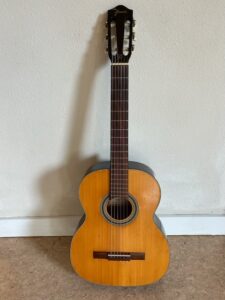
Of course, in IFS sessions with clients, we’ll only be doing dreamwork if the clients are curious about their dreams. However, exploring our own dreams (outside of client sessions) can be at least as valuable to our clients as exploring theirs. Our own dreams can be an advanced course in parts work that will help make our Self energy more consistently available to our clients. When we work with our own dreams on a regular basis, we are giving our parts the opportunity to dress up as dream figures and communicate with us about what they need and who they are. In dreams, we can receive healing guidance and support from Self, and also learn directly from our parts as they express their needs, concerns, gifts and perspectives—deepening our IFS knowledge not through didactic teaching, but through practical, visceral experience.
Here’s one of my own recent dreams. Although on the surface it might seem to be a private drama centered around an exile, what excites me most about this dream is what it has to say about how both exiles and protectors express Self energy.
Protecting the Little Girl: I am in a guardian role for a little girl (about 7 years old). A friend of mine is introducing us to an old man. The old man seems decent enough, and has been asking permission to talk to the child. Apparently, he has something to tell her, and my friend thinks it’s okay, so I say yes. The old man bends down and starts talking to the little girl in a grandfatherly-friendly sort of way while my friend and I stand by watching. At one point, he puts his hand on her shoulder, and, instinctively and immediately, in a calm, firm voice, I tell him, “No touching, please.” He withdraws his hand and keeps talking. But, suddenly, a nasty smile comes over the man’s face and he says loudly, insistently, “You know your dog? Well it’s dead because your parents killed it on purpose. They killed it because it was bothering them.” Before we can stop him, he repeats the awful words, reaching out to put a hand on her shoulder again. The girl looks horrified and confused. She doesn’t know who she can trust.
I’m so shocked that I’m momentarily disoriented myself. I didn’t realize that her beloved dog had recently died. This terrible man apparently delights in tormenting her. As quickly as I can, I intervene and pull the girl out of his reach, shouting to my friend to get this guy out of here. My friend hustles the grinning man away.
Now I’m overwhelmed by my own concern for the child. I squat down to her level, and, desperate to undo the harm he has done, I start blurting out something about how bad the man was, and how her parents must have had the dog put to sleep because the dog was very sick…. Then I realize what I am doing. I don’t know anything about what actually happened to her dog, don’t even know whether her parents are trustworthy—I’m just trying to fix things, not respecting what the child needs in this moment, and essentially giving her more painful adult information to process when she’s already devastated.
In a much gentler tone, I apologize for my own careless words. I say I’m so sorry for letting the man say mean things to her. I let her know that I’m here to listen if she wants to talk about what happened to her dog, or how she feels about what the man said—but also let her know that she doesn’t have to do that now if she doesn’t want to. She wipes her tears, and tells me she wants to play her guitar and maybe we can sing together. At this point, she’s a little older (about 10). I’m proud of her, and feel great tenderness toward her as I hand her the guitar. She sits on a soft chair, and I sit on the floor at her feet to follow her lead and sing along. She begins to pluck a sad, soothing, simple tune. We both know she is going to be okay.
Although all of the dream figures have vague associations with my own personal history, they don’t seem to be connected to specific events, and I’m aware that they have a broader meaning. This dream represents more than the dreamer alone, as it conveys some essential truths about how parts may interact with one another in anyone’s dreams, in anyone’s life. In dreams as in waking life, Self energy often emerges from within parts, transforming those parts into the manifestations of Self that they are at their core.
Here, the little girl is not necessarily an exile at all—she is a child part who is holding grief (which is painful, but not a burden in itself). The old man’s words are a burden she receives, but does not have to keep carrying. She is fundamentally okay. Her protectors (my friend and I) may or may not be helpful, but we’re aware of her vulnerability, and we’re doing our best.
It’s important to bear in mind that the dream ego (the “I” in any dream) is not identical with the dreamer’s waking persona, and doesn’t represent that dreamer’s whole capacity for Self energy; the “I” in the dream is almost always a partwith beliefs, behaviors and reactions that may be mistaken or misguided (just like any part in waking life). Here, “I” am well-intentioned, but not necessarily helpful—as a manager trying to prevent burdens, and then as a firefighter trying to mitigate the impact of those burdens.
In response to the child’s pain, the dream ego as a manager/firefighter is desperate to control the situation, but then experiences a transformation, a softening that brings more Self energy. “I” become able to witness and invite the child to be wholly present with her feelings and needs. This brings a healthy maturing of the child’s capacities, so the deep, gentle music of the child’s own Self energy becomes available to the system as a whole.
This dream is, for me, a reminder to be mindful of the distinction between fixing and healing in IFS and in life. Parts try desperately to fix, solve, or avert pain—but Self energy acknowledges pain with love, listening attentively and waiting to harmonize as healing happens naturally. All parts carry Self energy within, and when they are Self-led, their responses to suffering can become authentic and helpful. The vulnerable child part in this dream trusts the Self-led guardian, and it makes the burden of the old man’s ugly words irrelevant. With this spontaneous unburdening, the harmfulness of his words is truly healed even though the original loss still hurts.
Finally, in a sense, the absent dog is the dreamer’s Self—a beautiful manifestation of Self energy, truly still present and alive in the hearts of the dream figures, inspiring the music of grief and love.
*
Note: In most dreams, the “villain” would probably also be a part—a misguided protector with a behavior intended to be helpful in some way. Here, the harmful old man resembles my grandfather (who caused a lot of harm, especially to children)—so this dream figure is wearing an appropriate costume. However, I’m not describing him as a part, because when I worked with him in an IFS session with myself, he did not respond like a part. The “old man” kept expressing only malicious intentions, which suggests that his presence as a character in the dream may indicate a UB (Unattached Burden) in my internal system. Unattached Burdens are beyond the scope of this short post, so if you’re interested in learning more, please take a look at the work of Robert Falconer. I don’t necessarily endorse everything Bob has to say on this subject (I have some skeptical parts), but his work represents a wealth of experience and insight related to UBs.

IFS BASICS: The above post assumes that you know a bit about the Internal Family Systems model. If you are not familiar with IFS, click on the succulents photo for some basic information.

INTERNAL FAMILY SYSTEMS COUNSELING ASSOCIATION: If you’re interested in bringing IFS to your own practice of spiritual care, check out the IFSCA website for some great programs and resources. IFSCA is a wonderful organization that emphasizes meaning and connection in IFS, and offers in-depth learning opportunities for both therapist and non-therapist practitioners who would like to become IFS-informed. Click on the treetop photo to visit their website (www.ifsca.ca).
Discover more from Wholehearted Presence
Subscribe to get the latest posts sent to your email.